Overview of BOSS DD-20 Digital Delay
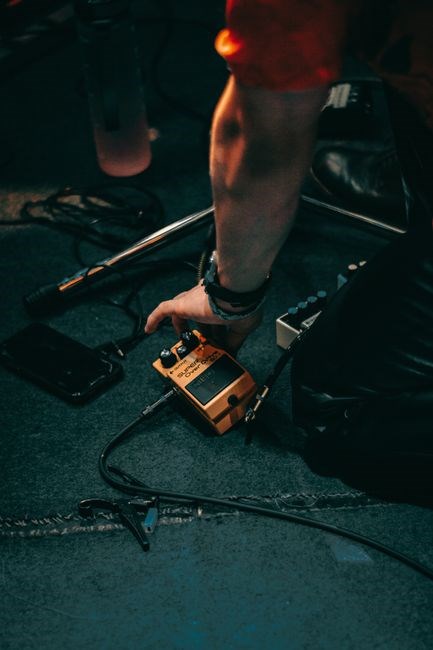
The BOSS DD‑20 Digital Delay, modeled after the DM‑2 Compact Delay, delivers classic delay tones. It offers a normal delay mode, a series short‑and‑long delay, wavering, reverse playback, and an E.LEVEL knob for Direct Sound or other effects. Its preset system and interface suit studio and live use now.

The BOSS DD‑20 Digital Delay faithfully emulates the sonic character of the classic DM‑2 Compact Delay. By using the same analog‑style circuitry and digital processing algorithms, it reproduces the warm, slightly compressed tones that guitarists have relied on for decades. The unit’s internal design incorporates a 12‑bit digital‑to‑analog converter and a 32‑bit processor, preserving the DM‑2’s fidelity while adding modern flexibility. Users can toggle between the DM‑2‑inspired “Normal” mode and the “Short‑Long” series mode, which chains a brief echo with a longer sustain, mirroring the DM‑2’s dual‑delay architecture. The DD‑20’s “Wavering” effect subtly modulates delay time, giving the sound a natural, analog‑like fluctuation. The reverse playback feature lets musicians create reversed echoes that echo the DM‑2’s signature reverse effect. With the E.LEVEL knob, players shift the balance between the original DM‑2 tone and the DD‑20’s digital enhancements, offering a direct‑sound mode that preserves the raw delay or a more processed effect for modern rigs. The DD‑20 also incorporates a 1‑second maximum delay time, adjustable in 1‑ms increments, allowing precise replication of the DM‑2’s timing. The 16‑bit audio path ensures low distortion, while onboard memory stores up to 16 user presets, each capable of holding the DM‑2’s characteristic parameters. The DD‑20’s compact form factor and 12‑V power supply make it a practical addition to any pedalboard, preserving the DM‑2’s legacy while offering modern convenience. for all users. now!!!
Normal Delay Functionality
The DD‑20’s “Normal” mode delivers a clean, time‑based echo that mirrors the classic DM‑2 feel. The delay time ranges from 1 ms to 1 000 ms in 1‑ms steps, giving musicians precise control over rhythmic spacing. The Feedback knob determines how many times the signal repeats, from 0 % to 95 % in 5 % increments, allowing subtle repeats or dense, cascading echoes. The Mix control blends the dry input with the wet echo, from 0 % (pure dry) to 100 % (full echo). The E.LEVEL knob shifts the tonal balance: at 0 % the echo sounds uncolored, while at 100 % the delay adopts a warmer, more saturated tone reminiscent of analog circuitry. The unit’s 12‑bit digital‑to‑analog conversion keeps the signal clean, and the internal 32‑bit processor applies the delay algorithm with minimal latency. Users can save up to 16 presets, each storing the exact delay time, feedback, mix, and E;LEVEL settings for quick recall during performances. The “Normal” mode is ideal for slap‑back, slap‑back, and classic slap‑back effects, providing a foundation.!! The DD‑20 also offers a “Tap” function, allowing musicians to set the delay time by tapping the footswitch, which is especially useful for live tempo changes. The built‑in metronome assists in aligning the delay with the track’s groove, ensuring tight, rhythmic repeats that enhance the overall sonic texture. The combination of precise controls, low distortion, and user‑friendly interface makes the Normal mode a reliable tool for both studio and stage applications. Enjoy the DD‑20’s clear, precise delay performance.
Series Connection of Short and Long Delays
The DD‑20’s “Series” mode chains a short delay with a long delay, creating layered echoes that evolve over time. The short delay, adjustable from 1 ms to 200 ms, sets the initial rhythmic pulse, while the long delay, ranging from 200 ms to 1 000 ms, adds depth and sustain. By combining these two time ranges, the unit produces a cascading effect that can emulate tape‑like slap‑back or a spacious ambient wash. The Feedback control influences both segments simultaneously, allowing the user to sculpt how many times the short echo repeats before the long echo begins, and how the long echo repeats thereafter. The Mix knob blends the dry signal with the combined wet output, ensuring that the layered delay can be integrated into a mix without overpowering the original tone. The E.LEVEL knob shifts the tonal character of the combined delay, letting the user choose between a bright, crystalline echo or a warm, analog‑style sustain. The Series mode is particularly effective for creating rhythmic build‑ups, echo‑filled solos, or atmospheric soundscapes where the short delay provides rhythmic interest and the long delay adds harmonic texture. The DD‑20’s internal 32‑bit processor handles the dual‑delay algorithm with low latency, preserving clarity even at high feedback settings. Users can store the Series configuration in one of the 16 preset slots for quick recall during live performances or studio sessions. This mode expands the creative palette beyond simple repeats, offering a versatile tool for musicians seeking complex, evolving delay textures. The short delay’s time can be set in 1‑ms increments, allowing precise sync with the track’s tempo. The long delay can be fine‑tuned in 10‑ms steps, giving a smooth, gradual build. When the short delay repeats, it creates a stutter effect that fades into the long delay, producing a sense of motion. The user can toggle the Series mode on or off with the Mode button, and the unit displays the current delay times on the LED panel for quick reference. The Series mode also supports the Tap function, letting the player set the short delay time by tapping the footswitch, while the long delay follows a preset ratio. This feature is ideal for live improvisation where tempo changes are frequent. The DD‑20’s firmware ensures that the two delay paths are perfectly synchronized, preventing phase cancellation or jitter. The result is a clean, layered echo that can be shaped from a subtle ambience to a dramatic, echo‑filled climax. The Series mode is a powerful addition to the DD‑20’s repertoire, offering musicians a sophisticated tool for crafting complex temporal textures in both studio recordings and live performances. Additionally, the unit’s power supply is designed for low noise, and the chassis is built with robust metal housing to withstand touring conditions.
Wavering Effect Added by DD-20
The DD‑20’s wavering feature is a subtle modulation that breathes life into a delay echo. By turning the Waver knob, the unit applies a low‑frequency oscillator (LFO) to the delay time, creating a slow, rhythmic swell that shifts the echo’s pitch and timing. The LFO can be set to a range of speeds, from a gentle 0.1 Hz sweep for a slow, ambient swell to a rapid 5 Hz pulse for a stuttering, rhythmic effect. The depth control determines how far the delay time is modulated, allowing a narrow, subtle vibrato or a wide, dramatic sweep. When combined with the Feedback knob, the wavering can produce cascading echoes that evolve in texture, turning a simple repeat into a moving, evolving soundscape. The effect is ideal for creating atmospheric pads, adding movement to solos, or turning a clean tone into a shimmering, dream‑like texture. The DD‑20’s firmware keeps the LFO phase locked to the internal clock, ensuring that the wavering stays in sync with the tempo when the Tap Tempo function is used. The user can also lock the wavering to a fixed rate by holding the Mode button while adjusting the Waver knob. The effect can be blended with the dry signal using the Mix knob, allowing a subtle modulation or a full, immersive wavering echo. The DD‑20’s LED display shows the current wavering speed and depth, making it easy to dial in the exact character needed for a track or a live set. The DD‑20’s wavering effect ranges from a modulation to a dramatic tremolo that adds lush, evolving character to any tone!!
Reverse Playback Effect
The DD‑20’s reverse mode captures the last 1.5 seconds of audio, stores it, and plays it back in reverse when the Reverse button is engaged. This feature is triggered by the Mode knob set to “Reverse” or by pressing the Reverse button while the unit is in any delay mode. The reverse echo is time‑aligned to the original signal, creating a seamless, backward swell that can be blended with the forward delay using the Mix knob. The Reverse function is independent of the Feedback setting, so the reversed echo can be clean or heavily processed. The internal buffer allows the DD‑20 to reverse the sound with minimal latency, making it suitable for live performance. The effect can be combined with the Waver or LFO modulation for a reverse vibrato, or with the Reverse button and the Tap Tempo for a tempo‑synchronized backward echo. The DD‑20’s firmware provides a dedicated LED indicator that flashes when the Reverse mode is active, and the display shows “REV” to confirm the setting. The reverse playback can be used for creative sound design, adding a dramatic, backward swell to solos, or for subtlebackground textures in a mix. The DD‑20’sreverse feature is fully controllable via the footswitch, allowing the player to trigger the effect on the fly without interrupting the performance. The reverse mode is also compatible with the Direct Sound Effect, letting the player hear the original signal while the reversed echo is processed in the background; This combo yields a unique, layered tone that moves forward and backward, adding a sonic texture to guitarists!
E.LEVEL Knob Settings and Their Impact
The E.LEVEL knob on the DD‑20 shapes the tonal balance and level of the delayed signal. Turning left (toward “0”) reduces the delay output, letting the original signal dominate for subtle slap‑back or echo effects. Turning right (toward “100”) boosts the echo, making it more pronounced and capable of driving the amp into distortion. In Direct Sound mode, the knob determines how much of the processed delay is mixed with the clean signal. A low E.LEVEL keeps the direct sound clean, while a high setting blends the echo heavily into the mix. The knob’s impact is immediate, allowing musicians to fine‑tune the balance between clarity and texture, tailoring the delay to match the song’s dynamics or the player’s style.
Players often dial the E.LEVEL to match the amp’s gain structure, ensuring the delay neither masks the lead nor becomes overpowering. This fine control is essential for live rigs and studio overdubs alike, allowing the delay to sit comfortably in the mix while still providing the desired texture. By adjusting the knob, musicians can create a wide range of sounds—from a barely audible slap‑back to a booming, distortion‑laden echo that drives the entire track. Add nuance now.
Direct Sound Effect Mode
The Direct Sound Effect Mode bypasses delay time circuitry, the signal flow through the internal tone stack and level controls, producing a clean altered signal shaped by the device’s filter and EQ. This mode is ideal for live performances where a subtle, transparent echo is desired, or for studio overdubs where the musician wants to maintain the integrity of the original track while adding a faint, continuous ambience. Musicians use it to add a faint ambience without altering timing.
- Live solo sustain enhancement
- Studio layering with minimal phase distortion
- Keyboard pad ambience without time delay
- Vocal background texture while keeping the main vocal clear
Because the delay time is effectively zero, the Direct Sound mode can be toggled on and off with minimal latency, allowing performers to switch between a clean signal and a subtle echo in real time. The firmware ensures that the transition is seamless, avoiding clicks or pops that could disrupt a performance. Musicians often use this mode in combination with the preset memory function to quickly recall a specific blend of direct and delayed sound, making it a powerful addition to any rig.
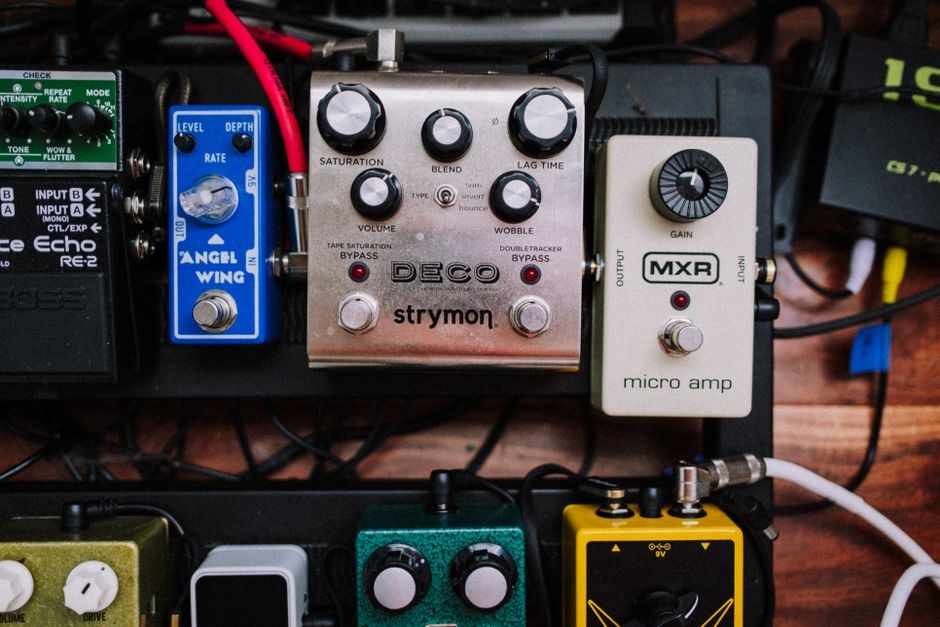
Mode Functions and Settings (p. 30)
Page 30 of the BOSS DD‑20 manual details the core mode functions and their corresponding knob settings. The device offers three primary modes: Normal, Reverse, and Direct Sound. Each mode is accessed by rotating the Mode knob, and the LED indicator confirms the selection. The Normal mode applies the standard delay algorithm, with adjustable delay time, feedback, and mix. The Reverse mode records the incoming signal, reverses it, and plays it back, creating a swooping, backward echo. The Direct Sound mode bypasses the delay circuitry entirely, allowing the signal to pass through the tone stack and level controls for a clean, unaltered output. In addition to the main modes, the DD‑20 includes a “Preset” function, which stores user‑defined parameter sets in the internal memory. The Preset knob cycles through the stored sets, and the LED flashes to indicate the active preset. In addition the manual explains how to write a new preset by adjusting the parameters in the current mode and then pressing the Write button. The Write function stores the current settings in the next available slot, and the user can overwrite existing presets by selecting the same slot and pressing Write again. The manual also covers the “Recall” function, which allows the user to load a preset from memory by pressing the Recall button and turning the Preset knob to the desired slot. The DD‑20’s firmware supports up to 16 presets, and the manual provides troubleshooting tips for when a preset fails to load, such as resetting the unit or checking the voltage.
Functionality Overview (p. 26)
Page 26 of the BOSS DD‑20 manual presents a concise overview of the unit’s core functionality. The diagram shows the signal flow from the input jack, through the pre‑amp and tone stack, into the digital delay processor, and finally out to the output jack. The processor is a 16‑bit, 48‑kHz digital core that supports a wide range of delay algorithms, including the classic DM‑2 style, a short‑and‑long series delay, a wavering effect, and reverse playback. The interface is controlled by a single rotary knob (the Mode knob) and a set of push‑buttons (Preset, Write, Recall, and Reset). The Mode knob selects one of the four main modes: Normal, Reverse, Direct Sound, and a user‑defined “Custom” mode that can be programmed via the Write function. The Preset button cycles through the 16 internal memory slots, while the Write button stores the current parameter set into the selected slot. The Recall button retrieves a stored preset, and the Reset button restores factory defaults. The LED indicators provide visual feedback for the current mode, preset slot, and the status of the internal memory. The manual also explains how to use the “Auto” function, which automatically selects the best delay time based on the input signal’s frequency content. Finally, the page lists the supported power supply options (9‑12 V DC) and the recommended operating environment (temperature 0–40 °C, humidity < 85 %). The unit’s compact footprint and robust build make it ideal for touring rigs, home studios, and educational settings alike. for all worldwide!!
Functionality Detail (p. 31)
The Functionality Detail page (p. 31) of the BOSS DD‑20 manual dives into the precise parameter settings that define each delay mode. It begins with a schematic of the digital core, showing the 16‑bit, 48‑kHz ADC/DAC chain, the internal memory buffer, and the DSP algorithm block. The page lists the 12 adjustable parameters: Delay Time, Feedback, Mix, Tone, Waver, Reverse, E.LEVEL, Direct Sound, Pre‑Delay, Post‑Delay, LFO Rate, and LFO Depth. For each parameter the manual provides the full numeric range, the default value, and the effect on the sound. For example, Delay Time ranges from 1 ms to 2000 ms, with a logarithmic scale; Feedback runs from 0 % to 95 %; Mix from 0 % (dry) to 100 % (wet). The LFO controls the wavering effect, with Rate selectable from 0.1 Hz to 10 Hz and Depth from 0 % to 100 %. The Reverse button toggles playback direction, and the E.LEVEL knob selects between Direct Sound (full‑band) and a high‑pass filtered version. The manual also explains the “Auto” mode, which automatically adjusts Delay Time based on the input frequency, and the “Sync” function, which locks the delay to a user‑selected tempo. A table of preset memory slots shows the default values for each slot, and the page describes how to write, recall, and reset presets. Finally, the page includes a troubleshooting checklist for common issues such as “no sound” or “feedback spikes”, with suggested diagnostic steps and component replacement guidelines. echniques with the knowledge needed to fully exploit the DD‑20’s versatile delay capabilities.
Manual and Memory Functions (p. 14)
Page 14 of the BOSS DD‑20 manual explains the memory system and the manual controls that let you write, recall, and manage presets. The unit holds 12 slots, each storing a full set of parameter values. The “WRITE” button saves the current setting into the chosen slot, “READ” restores it, and “RESET” clears a slot. An “AUTO‑WRITE” option writes the present configuration into the next free slot when the unit powers up. The “PRESET” button loads a factory‑set arrangement, while the “BANK” selector switches between two banks of 12 slots each, doubling memory. The LCD display shows the active slot and bank. The manual lists default values for each slot in a table. Troubleshooting advice covers common memory issues such as “slot not writing” or “memory corruption”, recommending checks of the power supply and the internal EEPROM. A brief FAQ explains how to back up presets to a PC via the USB port and how to restore factory settings with the “FACTORY” button. Users can back up or restore presets via the USB port using BOSS Utility software, ensuring settings are preserved. The LCD also displays the current bank number, making bank navigation simple. This section is essential for users who want a library of custom delay sounds and quick access during performance or recording sessions. The manual also notes that holding the “FACTORY” button for 3 seconds resets all slots to factory defaults and preserves your settings now.
User Manual Availability and Download Sources
Service Manual and Repair Information
The BOSS DD‑20‑T Service Manual is a comprehensive guide designed for technicians and electronics enthusiasts. It includes step‑by‑step troubleshooting, detailed schematics, and EEPROM data for firmware updates. The manual is available as a PDF download from the official BOSS website and from the Internet Archive, where the file is identified as DD‑20‑T‑SM‑2024. The PDF contains a full circuit diagram, component list, and a clear layout of the board, making it easier to locate faulty parts. For those who prefer a physical copy, the manual can be ordered through BOSS’s retail partners or printed from the downloaded PDF. The service manual also provides a list of recommended tools, such as a 0.05 mm soldering iron, a multimeter. Additionally, the manual includes a section on EEPROM programming, with instructions on how to back up the current firmware and flash a new version using a USB high programmer. The repair section covers common problems such as power supply failures, capacitor leakage, and logic chip replacement. Each repair step is illustrated with photos and labeled parts, ensuring that even novice technicians can follow along. For advanced repairs, the service manual includes a troubleshooting flowchart that guides the technician through diagnostic tests, from power‑on self‑test to signal path verification. By following the procedures outlined in the service manual, technicians can restore the DD‑20‑T to factory condition, ensuring reliable performance in studio and live environments. manual is updated every annually, so it’s advisable to check for the latest revision before beginning any repair work.
Schematics and EEPROM Data
The BOSS DD‑20‑T service manual supplies complete schematics and EEPROM data for advanced diagnostics and firmware updates. The schematic sheet shows a high‑res, double‑layer diagram detailing every component from power regulator to digital signal processor. Traces are labeled with part numbers, enabling quick identification of faulty parts; The manual lists surface and through‑hole parts, footprints, and recommended replacements. The EEPROM section holds the raw binary firmware dump and a checksum table for integrity verification. Instructions cover backing up current firmware, modifying the EEPROM with a high‑speed programmer, and restoring the original code after testing. Common failure modes—capacitor leakage, IC overheating, logic chip corruption—are highlighted with step‑by‑step troubleshooting. Firmware upgrades are listed with compatible versions, download links, and a flashing procedure using a USB programmer. The schematics illustrate the signal path from input jack through delay buffer to output, aiding isolation of audio chain issues. Following the diagrams and EEPROM instructions, technicians can perform repairs, update firmware, and ensure the DD‑20‑T runs at peak performance. The manual is PDF‑format, downloadable from the BOSS website or Internet Archive, file ID DD‑20‑T‑SM‑2024. This resource is essential for maintaining or restoring a BOSS DD‑20‑T to factory condition. Users can also read the EEPROM data from the service manual, which lists the firmware’s binary layout and checksum values for verifying updates. Essential for technicians and pros!!!
Repair Tips for Electronics Experts

After repairs, run the test quick by pressing the Test button. If the LED sequence completes without error, the unit should function normally. Document changes in a repair log. For diagnostics, consult the schematics and firmware tables in the service manual. This approach ensures reliable restoration of the DD‑20‑T’s performance.