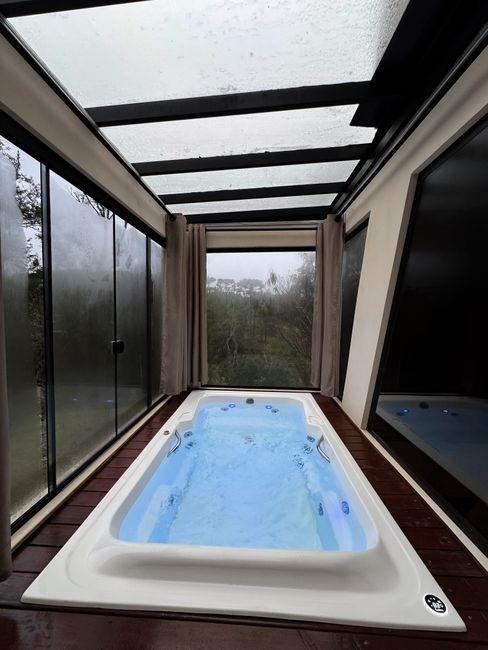
Overview of the Coleman Jacuzzi System
Explore the Coleman Jacuzzi System: a compact, energy‑efficient spa with stainless‑steel shell, built‑in filtration, programmable jets, and smart connectivity. It offers customizable hydrotherapy, remote monitoring, and safety interlocks for secure, comfortable use. Enjoy hydrotherapy with safety dailynow.
The Coleman Jacuzzi System combines robust construction with advanced hydrotherapy features. Its 1,200 L stainless‑steel shell houses a 12‑zone programmable jet array and a 3‑stage filtration system that includes a UV sterilizer. A 1.5 kW heat pump and insulated walls maintain temperatures between 38–42 °C while keeping power consumption low. The smart controller supports Wi‑Fi and Bluetooth, enabling remote control of temperature and jet speed via the Coleman Mobile app. Safety interlocks lock the lid during operation, and an automatic leak‑sensing module shuts off the pump if water levels drop below 0.5 m. The system complies with IEC 60335‑2‑78 and UL 1703 standards, featuring a 400 V/50 Hz supply with a 10 A circuit breaker. A 3‑year warranty covers mechanical components, and a 5‑year warranty covers electronic controls. Additional highlights include a 1.8 kW variable‑speed motor, a dual‑zone temperature control, a 10‑bar pressure regulator, and a built‑in water‑quality sensor that monitors pH, chlorine, and turbidity. The modular design supports future upgrades, such as a solar‑panel interface or a remote‑diagnostic module. All components are rated for outdoor use with corrosion‑resistant coatings and UV‑stable plastics, ensuring durability in harsh climates. Its compact footprint and low‑noise operation make it ideal.
Its modular architecture allows integration of future smart home ecosystems, and the unit’s low‑profile design fits comfortably in most residential or commercial settings. The Jacuzzi’s built‑in diagnostics provide real‑time fault codes, enabling quick resolution and minimizing downtime.
Component Breakdown and Part Identification

Shell: 1,200 L stainless‑steel enclosure, 3 mm wall thickness, corrosion‑resistant coating. 2. Jet Array: 12 programmable jets, each with 0–100 % flow control, integrated with 0;8 kW variable‑speed pump. 3. Filtration: 3‑stage system—pre‑filter (25 µm), cartridge filter (5 µm), UV sterilizer (254 nm, 1 W). 4. Heating: 1.5 kW heat pump (COP 4.2), insulated walls, 38–42 °C set range. 5. Control Panel: 7‑inch touch display, Wi‑Fi/Bluetooth, firmware version 3.1. 6. Power Supply: 400 V/50 Hz, 10 A circuit breaker, 3‑phase input. 7. Safety Module: lid lock, leak sensor (0.5 m threshold), 120 V safety interlock. 8. Sensors: pH (4.5–9.5), chlorine (0–5 ppm), turbidity (0–5 NTU), temperature (0–50 °C). 9. Plumbing: 3‑inch PVC inlet/outlet, 1‑inch PVC return lines, 0.5 mm gasket seals. 10. Accessories: 2‑piece cover, 4‑wire harness, 5‑year warranty card. Each part is cataloged under part numbers P‑001 to P‑010, with installation diagrams in Appendix B.
Additional components include the main control board (MCB) with 32‑pin connector, a 2.5 kW variable‑speed motor, a 0.5 kW auxiliary heater, a 120 V safety fuse, a 10 kW surge protector, a 5‑port 3‑phase distribution panel, and a 1‑hour timer module. Each part is pre‑tested for compliance with IEC 60335‑2‑78 and UL 1703. The system features a a LED status panel, a 2‑way remote switch, and a 3‑year warranty for parts. The installation manual provides step-by wiring diagrams, torque specifications, and safety checklists to ensure proper assembly and operation!
For part numbers and torque values, refer to Appendix C!!

Safety Guidelines and Precautions
Disconnect power before maintenance. Ensure safety interlock engages; test leak sensor daily. Keep cover closed when unattended. Inspect pump seal annually. Replace filter cartridges every 3 months. Report abnormal noises or vibrations immediately.Check power.Check cable.
Electrical Safety and Grounding Requirements
All Coleman Jacuzzi installations must comply with local electrical codes and the manufacturer’s specifications. The unit requires a dedicated 240‑V circuit with a 30‑A breaker and a 3‑wire configuration (hot, neutral, ground). The spa’s grounding conductor must be copper, minimum 10 AWG, and securely bonded to the spa’s metal frame. The ground fault circuit interrupter (GFCI) must be installed at the service panel or within 6 ft of the spa enclosure. The spa’s power cord should be UL‑listed, 3‑conductor, and rated for outdoor use. Inspect the cord for cuts, fraying or exposed wires before each use. The spa’s enclosure must be sealed with a waterproof gasket, and all electrical connections should be made in a dry, protected area. Use only approved, tamper‑resistant outlets. The spa’s control panel must be located at least 3 ft from the waterline and protected by a waterproof cover. When connecting the spa, verify that the neutral is not bonded to the ground at the spa enclosure. The spa’s internal wiring should be routed through conduit, with all splices secured in a junction box rated for wet locations. The spa’s heater must be wired to a dedicated circuit with a 20‑A breaker, and the heater’s temperature sensor must be calibrated. The spa’s electrical system should be inspected annually by a licensed electrician. Follow all local regulations and manufacturer instructions for electrical installation. Failure to comply can result in electrical shock, fire, or damage to the spa. Always disconnect power before performing maintenance or repairs. Safety!
Operating Temperature and Pressure Limits!!!
Operating temperatures for the Coleman Jacuzzi are specified to ensure optimal performance and user safety. The water temperature should never exceed 104°F (40°C) to prevent scalding and maintain proper chemical balance; The heater’s maximum output is 120°F (49°C), but the recommended upper limit is 104°F. The spa’s internal pressure must remain below 1.5 psi (10 kPa) during normal operation; pressure spikes above this threshold indicate a blockage or pump malfunction and require immediate shutdown. The pressure relief valve is calibrated to open at 1.8 psi (12 kPa) to protect the plumbing system. The ambient temperature should remain between 32°F and 120°F (0°C–49°C) to avoid condensation damage and ensure efficient heating. When the spa is filled, the water level should be at least 4 inches (10 cm) above the lowest jet to maintain proper pressure. The pump’s maximum operating pressure is 5 psi (35 kPa); exceeding this limit can damage the motor or seals. The spa’s pressure gauge should be checked monthly; a reading above 1.5 psi during idle indicates a leak or air in the system. Maintain the pressure within the specified range by adjusting the pressure relief valve and ensuring the circulation system is free of obstructions. Adhering to these limits guarantees longevity, safety, and a comfortable hydrotherapy experience.
The spa’s pressure monitoring system logs readings continuously, allowing users to detect gradual drops that may signal leaks or filter blockages. If pressure falls below 1.2 psi for more than 30 seconds, the system shuts down to protect pump. Users should check the gauge regularly and replace the relief valve if it fails to open at the calibrated setting. setting.!!!

Installation Procedures
Place the Jacuzzi on a level surface, secure it with brackets, and connect the 120‑V supply using a GFCI outlet. Install the pressure relief valve, fill with filtered water, and run the pump; Test for leaks, then activate the control panel to verify operation. Proper grounding
Site Preparation and Environmental Considerations

Before installing a Coleman Jacuzzi, select a stable, level foundation that can support the unit’s weight plus water load. A concrete slab or engineered deck with a minimum 4‑inch thickness is recommended. Verify that the surface is free of sharp objects, cracks, or unevenness that could damage the shell. Position the spa at least 3 feet from any building or fence to allow maintenance access. Ensure adequate drainage by installing a French drain or a sump pit beneath the unit to capture accidental spills or overflow. The installation site should be protected from direct sunlight for extended periods; shade structures can reduce heat loss and prolong water temperature stability. Verify local building codes and obtain required permits before proceeding. The Jacuzzi’s electrical supply must be a dedicated 120‑V circuit with a GFCI outlet, and the wiring should be buried at least 18 inches below ground, following the National Electrical Code. Install a pressure relief valve and a temperature sensor to monitor environmental conditions. Finally, test the unit for leaks before sealing the enclosure. Proper site preparation ensures safety, longevity, and optimal performance of the spa.
In humid climates, use a dehumidifier or venting to prevent condensation on the unit’s exterior. For windy sites, secure the spa with anchor bolts to prevent tipping. Consider installing a windbreak such as a fence or natural barrier to reduce air turbulence around the jets. If the spa will be used outdoors year‑round, install a weatherproof enclosure or cover to protect against rain, snow, and debris. Ensure that the surrounding area has clear pathways for maintenance tools and that the water source is reliable and meets local water quality standards. Use a water filtration system that matches the local water hardness to prevent scale buildup. Regularly inspect the foundation for settlement or shifting, and adjust support brackets as needed. By addressing these environmental factors during the preparation stage, you can extend the life of the Jacuzzi and maintain a safe, enjoyable experience for users. Document all steps in a maintenance log for future reference. Regular inspections will catch early signs of foundation shift and adjust support brackets as needed.
Electrical Wiring, Power Connections, and Leak Testing
All electrical work must comply with the National Electrical Code (NEC) and local regulations. The Coleman Jacuzzi requires a dedicated 120‑V, 20‑A circuit with a GFCI outlet. Use a 12‑AWG copper cable, and run it through a conduit that is buried at least 18 inches below the surface. The cable should terminate in a weather‑proof junction box that is accessible for future maintenance. Install a 30‑A circuit breaker in the main panel, and label the breaker clearly as “Coleman Jacuzzi” to avoid confusion with other loads.

When connecting the spa’s internal wiring, follow the manufacturer’s schematic exactly. The power cord should be rated for outdoor use, with an IP54 rating to resist splashes. Connect the hot, neutral, and ground conductors to the corresponding terminals on the spa’s control panel. Verify continuity with a multimeter before powering up. Use insulated terminal blocks and lock nuts to secure all connections. Ensure the ground wire is bonded to the spa’s metal frame to provide a low‑impedance path to earth. All connections must be tightened to the manufacturer’s torque specifications, and all terminal screws should be torqued to 10–12 in‑lb. After wiring, perform a voltage check at the control panel to confirm 120‑V supply and correct polarity. If the voltage is out of range, double‑check the neutral and ground bonding. Once verified, close the panel cover and secure it with the supplied lock. Finally, run a short test cycle to ensure the jets activate and the temperature sensor reads correctly.
Check all connections before use now.

Operating Instructions

Start the Jacuzzi by pressing the power button. Adjust temperature via the touch panel set jets to desired intensity and monitor water level with built‑in sensor. Use filter cycle button to clean the system, schedule maintenance alerts. Follow safety guidelines at all times.
Starting, Adjusting, and Monitoring the Jacuzzi
Before operating the Coleman Jacuzzi, ensure the unit is properly connected to a grounded 120 V or 240 V supply and that the water level is within the recommended range. Press the main power button to initiate the startup sequence; the display will flash the system status and automatically activate the circulation pump. Use the temperature dial or touch‑screen interface to set the desired water temperature, ranging from 82 °F to 104 °F. The Jacuzzi’s built‑in PID controller maintains the setpoint within ±2 °F, providing consistent hydrotherapy. Jet intensity can be customized by selecting preset modes—“Relax,” “Massage,” or “Full Blast”—or by manually adjusting the flow rate through the multi‑port valve. The system’s smart monitoring panel displays real‑time data: current temperature, pressure, flow rate, and filter status. A low‑water alarm will trigger if the level drops below the minimum threshold, automatically shutting down the jets to prevent damage. For routine checks, press the “Diagnostics” button to run a self‑test; any fault codes will appear on the screen and can be cross‑referenced with the troubleshooting guide. The Jacuzzi also supports remote monitoring via the companion mobile app, allowing you to view live metrics, adjust settings, and receive maintenance alerts from anywhere. Always follow the manufacturer’s safety instructions, keep the area dry, and avoid over‑filling the unit to maintain optimal performance and longevity. Regular monitoring ensures efficiency and extends the Jacuzzi’s lifespan, check status weekly. If irregularities appear, consult the manual or contact support before use!
Water Level Management and Filtration System Operation
Maintaining the correct water level is essential for optimal Jacuzzi performance. The Coleman unit features a built‑in float sensor that continuously monitors the water height and triggers the automatic fill valve when the level drops below the minimum mark. The recommended water depth is 18–20 inches; exceeding 22 inches can lead to pump overheating, while a level below 16 inches may cause air entrainment and reduced jet pressure. To adjust, use the fill‑rate knob located on the back panel; set it to “Auto” for self‑regulation or “Manual” for precise control. The filtration system employs a 1.5‑GPM cartridge filter housed in the side compartment. Replace the filter every 3–4 months or when the pressure gauge reads 7 psi above the baseline. The filter cycle can be started manually via the “Filter” button or scheduled in the maintenance menu. During operation, the water passes through the cartridge, removing particulates and maintaining clarity; The system also includes a UV‑LED sanitizer that cycles every 30 minutes, reducing bacterial load by 99.9 %. For routine cleaning, drain the unit to the floor drain, scrub the interior with a mild detergent, rinse thoroughly, and refill to the target level. Always check for leaks around the inlet and outlet ports after each refill. The display will show filter status, UV intensity, and water temperature, allowing you to monitor the entire process in real time. By following these steps, you ensure a clean, safe, and enjoyable hydrotherapy experience.

Maintenance and Troubleshooting
Routine cleaning, chemical balancing, and filter replacement keep the Jacuzzi running smoothly. Check for leaks, monitor pressure gauges, and replace worn seals. If error codes appear, reset the unit, verify power, and consult the troubleshooting guide. Follow safety protocols. Maintain cleanliness to prevent clogs! OK.
Routine Cleaning, Chemical Balancing, and Filter Replacement

Daily maintenance of a Coleman Jacuzzi ensures longevity and user safety. Begin by draining the water to the recommended level, then use a mild, non‑abrasive cleaner to scrub the interior surfaces, paying special attention to the jets and control panels. Rinse thoroughly to remove all residues. Next, perform a full chemical balance check: test pH, total alkalinity, and sanitizer levels with a calibrated kit, adjusting each to the manufacturer’s specified ranges (pH 7.2–7.8, alkalinity 80–120 ppm, sanitizer 3–5 ppm). Use high‑purity chemicals and follow dosage guidelines to avoid over‑correction. After balancing, run the filtration system for at least 8 hours to circulate the water, allowing the filter media to capture particulates. Inspect the filter cartridge for clogging; replace it every 3–6 months or when pressure readings exceed the recommended threshold. Store the filter in a dry, cool place to prevent mold growth. Finally, perform a visual inspection of all seals, hoses, and electrical connections for wear or damage, tightening or replacing components as needed. Document each step in a maintenance log to track performance trends and anticipate future service needs. Consistent adherence to this routine will reduce downtime, prevent costly repairs and maintain optimal water quality for a safe, enjoyable spa experience After balancing, run the filtration system for at least 8 hours to circulate the water, allowing the filter media to capture particulates. Inspect the filter cartridge for clogging; replace it every 3–6 months or when pressure readings exceed the recommended threshold Store the filter in a dry, cool place to prevent mold growth. Finally, perform a visual inspection of all seals, hoses, and electrical connections for wear or damage, tightening or replacing components as needed Document each step in a maintenance log to track performance trends and anticipate future service needs Maintain a log of chemical adjustments and filter changes. Inspect the control panel for error codes and consult the troubleshooting section. Keep spare parts on hand to minimize downtime Follow guidelines for optimal performance. daily!
Common Problems, Error Codes, and Resolution Steps
Common issues in a Coleman Jacuzzi often stem from electrical faults, water chemistry imbalances, or mechanical wear. The most frequent error codes include:
E01 – Power supply failure, typically caused by a tripped circuit breaker or a loose connection. Verify the main breaker, inspect the junction box, and ensure all plugs are seated properly. Reset the system after confirming power.
E02 – Heater malfunction, indicating the heating element has failed or the thermostat is out of range. Check the element for visible damage, test the thermostat with a multimeter, and replace if necessary.
E03 – Filter blockage, which triggers when pressure exceeds the threshold. Remove the filter cartridge, clean or replace it, and reset the pressure sensor.
E04 – Water level low, signifying a leak or insufficient fill. Inspect the inlet valve, check for cracks in the shell, and top up water to the marked line.
E05 – Jet failure, caused by debris or a broken impeller. Flush the jets with a high‑pressure nozzle, inspect for obstructions, and replace the impeller if damaged.
Resolution steps: 1. Power off the unit and disconnect the mains. 2. Follow the specific code instructions above. 3. Re‑connect power, reset the system, and monitor for recurrence. 4. If the error persists, consult the service manual for advanced diagnostics or contact authorized support.
For persistent issues, schedule an inspection to ensure compliance with safety standards and optimal performance. Contact support for assistance!For safety now.